 Carter Garage Door & Gates
Seals are the cheapest-looking part of a garage door and among the easiest to ignore. They're also what keeps meltwater, leaves, mice and cold drafts out of the garage, and on an attached garage, away from the house wall.
Late fall is the right time to look them over, before the first salted storm. Below is what each seal does, how winter wears it down, a short inspection routine and a checklist. If you find damage, weather seal replacement is a straightforward repair.
The seals on a garage door and what each one does
| Seal | Where it is | What it stops |
|---|---|---|
| Bottom seal (astragal) | Rubber or vinyl strip along the bottom section, often slid into an aluminum retainer | Water, drafts and pests at the floor line |
| Perimeter weatherstrip | Flexible flap on the stop molding along the sides and top of the opening | Air and wind-driven rain around the door's edges |
| Section joints | Where the panels meet, on many insulated doors | Air leaks between sections |
| Threshold seal | Raised strip fixed to the garage floor | Water running in from a sloped driveway |
Wood doors often have the bottom seal nailed or stapled directly to the bottom edge, while steel doors usually use a retainer channel. The replacement method differs, so it helps to know which one you have.
How salt and slush wear things down
- Road salt rides in on tires and boots. Melted brine collects at the door line and speeds up rust on steel tracks, bottom brackets and retainer screws.
- Rubber stiffens in the cold. A seal that's flexible in October can crack or split once it's hard and brittle in January.
- Freeze-thaw opens gaps. Water that freezes in a torn seal or under the slab edge widens the gap a little each cycle.
- Plows and shovels pile slush against the door. When it refreezes, the bottom seal can bond to the ice.
If the bottom seal is stuck to the floor, pressing the opener can tear the rubber or overload the opener and the springs. Break the ice along the bottom first, then open the door. Spreading a little ice melt on the slab, not on the rubber, helps prevent a repeat.
A ten-minute seal inspection
- Close the door, turn off the garage lights on a sunny day and look for daylight along the bottom and sides.
- Run your hand along the bottom rubber. It should feel soft and even, not cracked, flattened or torn.
- Check the retainer channel for bent sections, corrosion or missing screws.
- Look at the corners where the bottom seal meets the side weatherstrip; gaps there let in water and mice.
- Press the side flaps against the door. They should touch the face of the door lightly along their full length.
- Rinse salt off the bottom section and the lower track with plain water on a mild day.
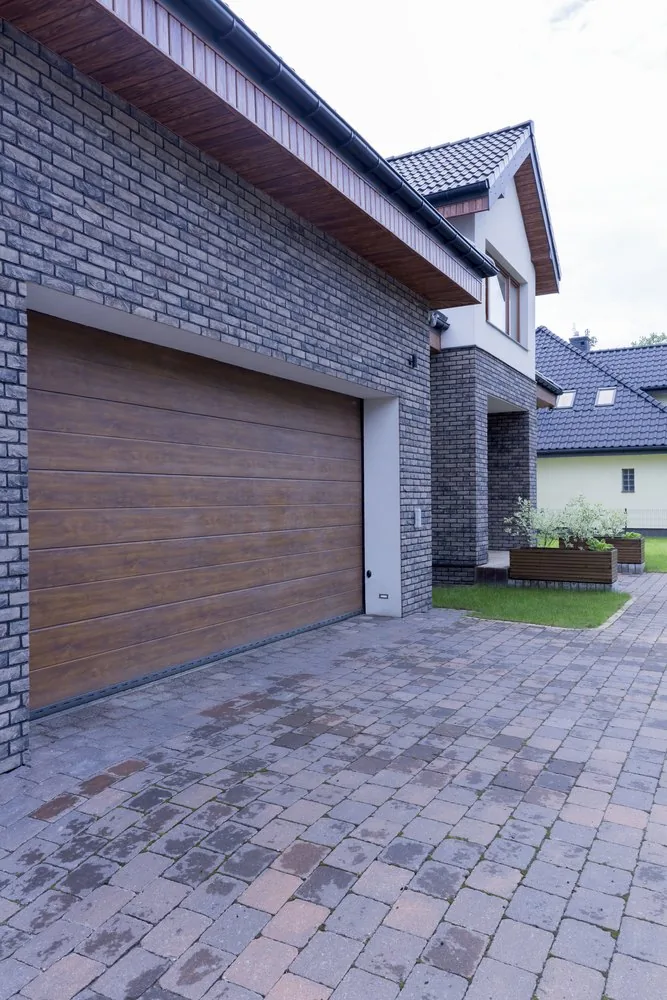
Daylight only in the middle of the door can mean the slab has settled or the door has bowed; daylight on one side often means the door isn't sitting level. Both are worth a closer look, since a new seal alone may not close the gap.
Winter garage door checklist
- Bottom rubber soft, intact and touching the floor across the whole width
- Retainer channel straight, screwed down and free of heavy corrosion
- Side and top weatherstrip touching the door with no tears
- Threshold seal (if fitted) firmly bonded, with no cracks
- Tracks and bottom brackets rinsed of salt and checked for rust
- Hinges, rollers and springs lubricated with a garage-door lubricant
- Photo eyes clean and aligned, and the auto-reverse tested
- Door balanced: holds roughly in place halfway up with the opener disconnected
- Keypad battery replaced if the keypad has been slow to respond
Lubricate moving metal parts, not the rubber seals. Some products degrade rubber; if a seal sticks, wipe it clean and let it dry instead.
When the seal or the door needs more than a cleaning
| What you find | Likely fix |
|---|---|
| Bottom rubber cracked, flattened or torn | Replace the bottom seal, matched to the retainer profile |
| Retainer bent or rusted through | Replace the retainer along with the rubber |
| Side flaps brittle or pulled away | Replace the perimeter weatherstrip |
| Gap only on one side of the door | Check door level, cables and springs before resealing |
| Rollers grinding or the door shaking in its tracks | Inspect rollers and track alignment |
If the door rides rough or sits crooked, worn rollers are a common reason; roller replacement often makes a door close evenly again. And if inspecting the bottom of the door turns up a frayed lift cable, call for a cable repair before using the door further.
Need it fixed?
Garage Door Weather Seal Replacement across North & Central New Jersey
Garage door or gate trouble? Carter answers 24/7, wherever you are in North or Central New Jersey.
Frequently asked questions
How do I know my garage door bottom seal needs replacing?
Look for daylight under the closed door, water or leaves blowing in, or rubber that's cracked, flattened or missing in spots. If the seal feels hard even on a mild day, it has likely aged out and won't close small gaps once winter arrives.
Why does water still come in with a new bottom seal?
Usually the problem isn't the seal. A floor that slopes toward the garage, a settled slab or a door that isn't sitting level can leave gaps a bottom seal can't fill. A threshold strip or a door adjustment may be needed alongside the new rubber.
My garage door is frozen to the ground. What should I do?
Don't keep pressing the opener. Disconnecting it won't help either, because the door is still stuck. Break the ice along the bottom edge with a plastic scraper or warm water, then wipe the slab dry. Ice melt on the concrete helps prevent a repeat.
Should I lubricate the rubber seals?
Generally no. Lubricant is for moving metal parts like hinges, roller bearings and springs. Some sprays can soften or degrade rubber. Keep seals clean and dry; if one sticks or tears, replacing it works better than coating it.